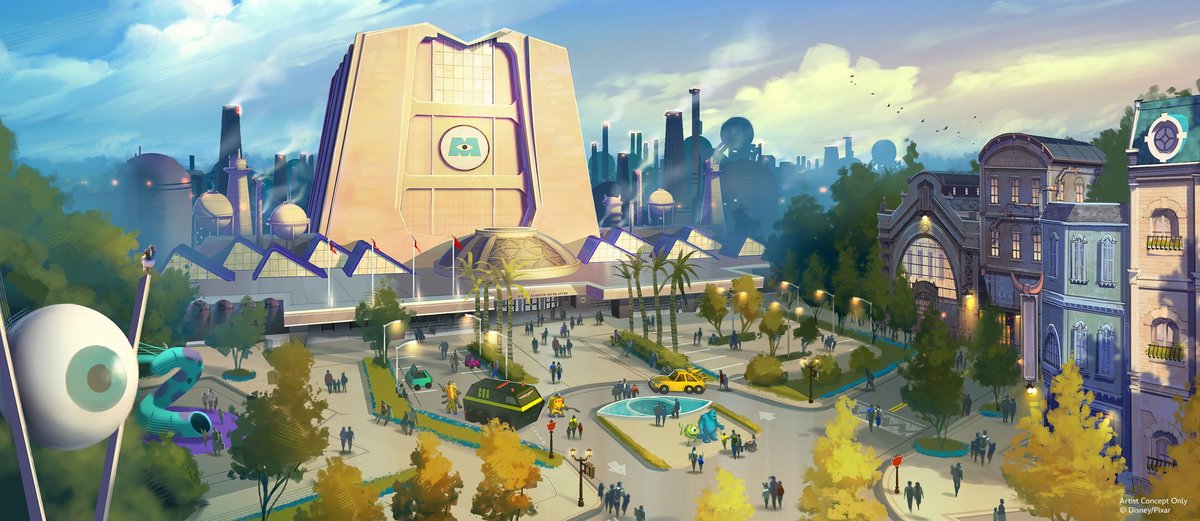
The glow of a child's bedroom light, the creak of a closet door, the distinct roar of a monster—these are the indelible images that define the Monsters Inc. Universe Lore & World-Building. It’s a meticulously crafted world that, beneath its vibrant surface, hums with intricate rules, a unique energy economy, and a fascinating social structure. Far from just a backdrop for laughs and scares, the Monster World is a masterclass in immersive storytelling, inviting us to peer behind the curtain of childhood fears and discover something far more complex and endearing.
As someone who's spent countless hours dissecting the animated marvels that shape our cultural landscape, I can tell you that the magic of Monsters Inc. doesn't just lie in its lovable characters. It's in the unseen threads of its lore, the logical leaps, and the emotional core that makes this world feel not just real, but profoundly resonant. Let's pull back the curtain and explore how this incredible universe was constructed, piece by painstaking piece.
At a Glance: Understanding the Monster World
- Energy Economy: The Monster World is powered by human emotion—initially screams, later laughter. This dictates their entire society.
- Interdimensional Travel: Closet doors are meticulously engineered portals to human children's bedrooms, a central piece of their technology.
- Monster Diversity: An astounding array of monster species, each with unique biology, abilities, and personalities, inhabit Monstropolis.
- Human Perception: Humans are initially perceived as toxic and dangerous, driving monster society's rules and regulations.
- Key Organizations: Monsters, Incorporated (the power company), the Child Detection Agency (CDA), and Monsters University (the elite scare academy) govern and shape monster life.
- Evolution of Story: The franchise spans a prequel (Monsters University), the original story (Monsters Inc.), and a sequel series (Monsters at Work), deepening its lore.
The Blueprint of Fear & Fun: Crafting Monstropolis and Its Inhabitants
Imagine a city built on the energy of human emotion. That's Monstropolis. It's not just a collection of buildings; it's a living, breathing entity whose very existence is intertwined with the human world, making the Monsters Inc. Universe Lore & World-Building truly stand out.
The City That Runs on Screams (and Later, Laughs)
Monstropolis is a marvel of urban planning, designed with monster physiology in mind. Its architecture is a blend of practical utility and whimsical design, featuring colossal buildings for towering monsters and smaller, more intricate structures for their diminutive counterparts. Think of the bustling downtown area with its towering skyscrapers, the residential districts with their diverse housing styles, and, of course, the colossal Monsters, Inc. factory that serves as the heart of its energy grid.
Every aspect of the city, from the transportation systems to the public services, is geared towards efficiency and monster comfort. Wide streets accommodate multi-limbed creatures, public transportation is robust, and the city thrives on a steady supply of power generated from the screams—and later, laughs—of human children. This direct link between another dimension and their urban energy source isn't just a plot device; it's the fundamental driving force behind their entire society, influencing everything from career paths to technological development.
A Multitude of Monstrous Forms: Diversity and Design
One of the most captivating elements of the Monster World is the sheer, boundless creativity in its creature design. From the one-eyed, lime-green Mike Wazowski to the furry, blue Sulley, the franchise showcases an unparalleled spectrum of monstrous forms. This isn't just aesthetic; it's deeply integrated into the lore.
- Physiological Adaptations: Every monster's physical traits—multiple eyes, extra limbs, wings, fur, scales, tentacles, horns—are often tied to their specific abilities, particularly their scare tactics. Think of Randall Boggs's chameleon-like camouflage or Fungus's numerous eye stalks aiding in data input.
- Specialized Roles: This diversity translates into specialized roles within the scaring industry and beyond. Some monsters are naturally terrifying, others excel at meticulous data entry, and still others are skilled in maintenance or operations.
- Cultural Nuances: The vast array of species hints at a rich cultural tapestry within Monstropolis, with different groups potentially having their own traditions, social structures, and even dialects, though the films primarily focus on a common monster culture.
This focus on diverse, functional design reinforces the idea that each monster has a place and purpose, adding depth to the world-building beyond mere visual appeal.
The Human Dimension: Feared, Then Befriended
At the core of the Monsters Inc. Universe Lore & World-Building is the fascinating dichotomy between the monster and human worlds. For generations, monsters were taught that human children were incredibly dangerous, toxic beings capable of causing catastrophic harm with a single touch. This pervasive fear shaped monster society, fueling strict safety protocols, elaborate containment measures (like the CDA's hazmat teams), and a deeply ingrained cultural taboo against contact with the human world.
The perceived danger of humans wasn't just a convenient excuse for scaring; it was a deeply held belief, passed down through generations, taught in universities, and reinforced by the powerful Child Detection Agency. The accidental arrival of Boo in Monstropolis shattered this misconception, revealing children not as vectors of disease, but as sources of immense joy and, more importantly, powerful laughter energy. This revelation didn't just change the lives of Sulley and Mike; it fundamentally reshaped the entire monster economy and societal outlook, proving that long-held beliefs can be overturned by empathy and understanding.
Powering the World: The Evolution of Energy Economy
The Monsters Inc. universe offers a brilliant, if quirky, take on energy production, tying it directly to the emotional output of another species. It’s a system with its own rules, technologies, and even ethical dilemmas, making it a compelling piece of the Monsters Inc. Universe Lore & World-Building.
From Primal Screams to Pure Laughter: The Great Shift
Initially, Monstropolis ran entirely on scream energy. This meant that the most vital profession was that of the Scarer, a highly skilled and respected role requiring intense training and natural talent. The entire infrastructure of Monsters, Incorporated, from the Scare Floor layout to the scream collection canisters, was optimized for this purpose. The harder a child screamed, the more energy was harvested, directly contributing to the city's power grid.
However, the discovery that laughter produces significantly more energy than screams—exponentially more, in fact—sparked a monumental shift. This wasn't just an efficiency upgrade; it was an industrial revolution. The entire energy economy had to pivot, moving from fear-based extraction to joy-based generation. This transition involved:
- Retraining the Workforce: Scarers had to become Jokers, adapting their skills from terror to comedy.
- Technological Re-engineering: Scream canisters needed to be reconfigured for laugh energy, and the collection process itself evolved.
- Cultural Reorientation: The societal perception of human children transformed from dangerous to delightful, altering monster-human relations forever.
This massive societal and industrial change, beautifully depicted in Monsters at Work, underscores the adaptability and ingenuity within the Monster World.
Understanding Scream/Laugh Energy Mechanics
How does it actually work? The lore implies that human emotions, specifically fear and joy, generate a measurable, collectable energy output. When a monster scares a child, the resultant scream produces a quantifiable amount of "scream energy" that is immediately collected into a specialized canister. Similarly, laughter produces "laugh energy."
- The Canisters: These iconic yellow (for scream) and rainbow-colored (for laugh) canisters are more than just storage devices. They act as energy converters, stabilizing and storing the raw emotional energy for use in the city's power grid.
- The Scare/Laugh Floor: This is the operational heart of the energy collection process. Doors leading to human children's rooms are meticulously managed, allowing monsters to quickly enter, perform their "work," and exit, with sophisticated equipment monitoring energy output and ensuring safety protocols are followed.
- Power Distribution: Once collected, these energy canisters are transported to the central power plant at Monsters, Inc., where the energy is fed into the city's grid, illuminating homes, powering factories, and fueling vehicles. It's a closed-loop system entirely reliant on interdimensional emotional harvesting.
The Technology Behind the Magic: Doors, Tanks, and Scare Floors
The technology within the Monster World is simultaneously advanced and charmingly analogue. At its heart lies the door system. These aren't just wooden doors; they're sophisticated interdimensional portals, each custom-linked to a specific child's bedroom.
- Door Mechanics: The doors are stored in a massive vault, moving on a complex conveyer belt system, activated and deactivated by a central control room. Their precision targeting and instantaneous travel represent a highly advanced form of quantum or dimensional mechanics, albeit one simplified for a monster-centric narrative.
- Scream/Laugh Tanks: These aren't just collection points; they're the interface between the human world's emotional energy and Monstropolis's power supply. They visually represent the city's power status, dropping dramatically when energy is low and filling with vibrant light when a successful scare or laugh occurs.
- Scare Floor Robotics & Analytics: The Scare Floor (and later, the Laugh Floor) is equipped with advanced technology for monster tracking, door management, and energy monitoring. From the floor managers overseeing operations to the robotic arms that handle doors, every detail is geared towards maximizing energy collection while minimizing risk. This constant vigilance speaks volumes about the dedication and complexity of the operation. Indeed, the very nature of their operations requires a system of oversight, almost like a watchful eye ensuring protocol and production remain uninterrupted, much like the idea of being Always Watching Monsters Inc. to maintain their power supply.
Rules of Engagement: Laws, Organizations, and the CDA's Watchful Eye
No functional society exists without its rules and enforcement. In the Monster World, this framework is crucial, especially given the perceived dangers of the human dimension.
The Child Detection Agency (CDA): Protectors or Overlords?
The CDA is arguably the most imposing organization in the Monster World, and for good reason. Their primary mission is to protect monster society from the perceived toxicity of human children. Decked out in distinctive yellow hazmat suits, they are the first responders to any "human contamination" incidents.
- Rapid Response: The CDA’s reaction time is lightning fast. Even a single stray sock from the human world triggers a full-scale lockdown and decontamination protocol. This highlights the deep-seated fear of humans that permeates monster culture.
- Enforcement & Secrecy: Beyond decontamination, the CDA enforces strict rules regarding interaction with the human world and maintains extreme secrecy about their operations. They are effectively the Monster World's national security and public health department rolled into one, with broad powers that can sometimes seem heavy-handed.
- Evolving Role: With the shift to laugh energy, the CDA's role likely also evolved, perhaps focusing less on decontamination and more on ensuring safe, ethical interaction with human children, though their vigilance remains a core part of the system.
Scaring Protocols and Interdimensional Travel
The act of scaring (and later, making laugh) isn't random; it's a highly regulated process.
- Strict Procedures: Scarers must adhere to rigid protocols on the Scare Floor, from clocking in to proper door handling and scare techniques. Safety is paramount, particularly the directive to never touch a human child or allow anything from the human world into Monstropolis.
- Door Accessibility: Doors are not freely accessible. Only authorized Scarers can interact with them, and only when assigned to a specific child's door for an official shift. This control is vital to prevent unauthorized interdimensional travel or accidental contamination.
- "Decommissioning" Doors: If a door is compromised or a child moves, the door is "decommissioned," shattered into countless pieces to prevent any lingering connection. This shows the extreme measures taken to maintain the integrity of their interdimensional separation.
Workplace Culture: Monsters Incorporated Through the Ages
Monsters, Incorporated is more than just a power plant; it's a thriving corporate entity with a distinct workplace culture that evolves over time.
- The Original Era (Screams): During the scream-energy era, the company fostered a highly competitive environment. Scarers were the rock stars, celebrated for their terrifying prowess. There was immense pressure to perform, driven by the city's insatiable demand for power. The internal hierarchy was clear, with a focus on efficiency, metrics, and maintaining the illusion of human toxicity.
- The Transition Era (Laughs): The shift to laugh energy required a radical transformation of the company's culture. Competition gave way to collaboration as monsters learned to make children laugh. The pressure points changed from terrorizing to entertaining. Monsters at Work vividly portrays this shift through the eyes of Tylor Tuskmon, an aspiring Scarer who suddenly finds himself relegated to the Facilities Team (MIFT) because his skills are obsolete.
- MIFT: The Unsung Heroes: The Monsters, Incorporated Facilities Team (MIFT) are the often-overlooked backbone of the company. They are the mechanics, repair crew, and general problem-solvers who ensure the plant runs smoothly. Their culture is one of teamwork, ingenuity, and a hands-on approach to problem-solving, a stark contrast to the spotlight-grabbing Scarers. This evolution in corporate culture provides a rich backdrop to the changing world of Monsters Inc.
Education and Aspirations: The Role of Monsters University
Before the roar of the scare floor, there's the hallowed halls of Monsters University. This prequel gives invaluable insight into the academic foundations of monster society and the formative years of our favorite duo. It's a crucial piece of the Monsters Inc. Universe Lore & World-Building that fleshes out individual character motivations and societal values.
Where Scares Are Taught: The MU Curriculum
Monsters University isn't just any college; it's the premier institution for aspiring Scarers. Its curriculum is rigorous, designed to hone natural talent and instill professional discipline.
- Scare School: The core of MU is the Scare School, where students learn the art and science of fear. This includes courses in "Scare Tactics," "Child Psychology" (from a monster perspective), "Advanced Roaring," and even "Human Anatomy" (to understand where to jump out from).
- Fraternities and Sororities: These Greek life organizations play a significant role, fostering competition, camaraderie, and networking among future Scarers. The "Roar Omega Roar" (ROR) fraternity represents the elite, emphasizing natural talent and family legacy. Other fraternities like Oozma Kappa (OK) represent the underdogs, showing that even those without inherent scare-power can find success through teamwork and unconventional methods.
- Diverse Fields of Study: While Scaring is the most prestigious path, MU offers other programs, hinting at the complexity of Monstropolis's workforce. There are schools for engineering, literature, and other fields, showcasing that not every monster is destined for the scare floor.
The Journey of Mike Wazowski and James P. "Sulley" Sullivan
Monsters University is primarily an origin story for Mike and Sulley, showing how two vastly different monsters came to be the best of friends and, eventually, the most successful duo at Monsters, Inc.
- Mike's Drive: Mike Wazowski, despite his lack of natural scariness, is a brilliant academic. He compensates for his physical shortcomings with intense study, strategic thinking, and an unshakeable belief in himself. His journey highlights the value of intellect, hard work, and determination in the Monster World.
- Sulley's Natural Talent: Sulley, on the other hand, is a prodigy. He possesses raw talent, a terrifying roar, and an imposing physique that makes him a natural Scarer. His initial reliance on natural ability over hard work leads to conflict, but his journey teaches him the importance of discipline, teamwork, and humility.
- The Power of Partnership: Their unlikely friendship, forged through adversity in Oozma Kappa, proves that the best teams combine diverse strengths. Mike's brains and Sulley's brawn become an unstoppable force, demonstrating that success often comes from collaboration rather than pure individual talent.
Beyond the Classroom: Life Lessons and Unexpected Paths
MU also explores the idea that life doesn't always go according to plan. Mike's dream of becoming a Scarer is thwarted, but his intelligence and perseverance lead him to become Sulley's indispensable assistant and later, a brilliant Laugh Coordinator. Sulley learns that true leadership isn't about natural talent alone, but about mentoring, empathy, and inspiring others. The film subtly teaches that there are many paths to success and that sometimes, failure can be the greatest teacher, setting the stage for their future roles at Monsters, Inc.
The Future is Bright (and Funny): Monsters At Work and Beyond
The ongoing Monsters at Work series picks up directly after the events of Monsters Inc. and offers an unprecedented look into the challenges and triumphs of a society in transition. It's an essential continuation of the Monsters Inc. Universe Lore & World-Building, showing how profound societal changes impact individual monsters.
Adapting to the Laugh-Powered World
The switch from scream to laugh energy is portrayed as a massive undertaking, affecting every monster and every department.
- Reinventing the "Scare" Business: The former Scare Floor is now the Laugh Floor, and the job description of a "Scarer" has fundamentally changed. Monsters must now cultivate comedic timing, observational humor, and a genuine desire to bring joy, skills vastly different from inducing terror.
- The Uncomfortable Truths: Not all monsters are naturally funny. Many, like Tylor Tuskmon, spent their lives training to be top Scarers, only to find their hard-earned skills obsolete overnight. This creates a realistic portrayal of industrial change and the human (or monster) cost of progress.
- Mike and Sulley's New Leadership: As the new CEO and President, Mike and Sulley lead this monumental transition. Mike, with his deep understanding of humor and management, becomes the driving force behind the Laugh Floor's success, while Sulley navigates the broader organizational changes and cultural shifts.
MIFT: The Unsung Heroes of Monsters Inc.
One of the most delightful aspects of Monsters at Work is its focus on the Monsters, Incorporated Facilities Team (MIFT). These are the blue-collar workers, the technicians and mechanics who keep the factory running.
- Behind-the-Scenes Operations: MIFT's adventures provide a glimpse into the intricate workings of the factory, from repairing faulty plumbing to fixing the massive door-transportation system. They are the practical problem-solvers, often encountering the quirky and unexpected challenges that arise in a monster-run facility.
- Found Family: The MIFT team, despite their initially skeptical reception of Tylor, quickly becomes a found family, embodying the values of camaraderie, mutual support, and celebrating individual quirks. Their diverse skills and personalities—from the enthusiastic Val Little to the cynical Fritz—showcase another layer of monster diversity and teamwork.
- Essential Contributions: The series emphasizes that while the Scarers (now Jokers) are the public face of energy production, MIFT's work is equally crucial. Without them, the entire operation would grind to a halt, highlighting the importance of every role in a functional society.
The Next Generation of Monsters
Monsters at Work also introduces new characters, signaling a new generation of monsters adapting to their changed world. Tylor Tuskmon, Val Little, and Duncan are all products of a post-scream era, navigating their careers and personal lives within the context of a laugh-powered economy. Their stories explore themes of adapting to change, finding your true calling, and the enduring power of friendship. This expansion of the universe ensures its continued relevance and offers new perspectives on the established lore.
Common Lore Conundrums: Debunking Myths and Clarifying Details
The Monsters Inc. Universe Lore & World-Building is remarkably consistent, but like any rich fictional world, it sparks questions. Let's tackle a few common ones.
Are Human Children Really Toxic?
No. The long-held belief that human children are toxic and dangerous was a massive misconception, largely fueled by ignorance, fear-mongering, and perhaps even deliberately perpetuated by figures like Henry J. Waternoose III to control the workforce. Boo's arrival and her interaction with Sulley conclusively proved that human children are harmless and, in fact, sources of immense joy. The fear was a cultural construct, deeply ingrained but ultimately baseless, serving only to prevent monsters from seeking alternative, more efficient energy sources.
How Do the Doors Work? A Peek Behind the Portal
While the exact physics are never fully explained, the lore suggests the doors are a form of interdimensional travel technology. Each door is custom-keyed to a specific human child, creating a stable portal to their bedroom.
- Keying Mechanism: It's implied that the initial "keying" of a door to a child might involve some form of biometric or spatial signature from the child's room, allowing the portal to consistently open to the correct location.
- Door Activation: The doors are "alive" with energy when active, allowing passage. When inactive or decommissioned, they are just ordinary wooden doors (or shattered pieces).
- Safety Protocols: The immense danger perceived from humans meant these doors were handled with extreme care and locked down at all times when not in use. The "decommissioning" process ensures no lingering connection, emphasizing the finality of a door's lifecycle. It’s a testament to the ingenuity of monster engineers.
Why Didn't They Just Use Laughter from the Start?
This is a classic "hindsight is 20/20" question. The simple answer is ignorance and deeply ingrained cultural beliefs.
- Generational Fear: Monsters had always believed humans were dangerous. They saw screams as the natural outcome of interaction and the only viable energy source. The idea that human joy could be an energy source was completely alien.
- Lack of Research: The monster society, likely driven by fear and profit, probably didn't invest in alternative energy research, preferring to stick with the "tried and true" method of scaring. Waternoose, for instance, was obsessed with finding more screams, not alternative power.
- Accidental Discovery: Laughter's superior energy potential was an accidental discovery, born from Sulley and Mike's unique bond with Boo. It wasn't a planned scientific breakthrough but an emergent truth revealed through empathy and breaking societal norms. This accidental discovery is a powerful narrative device, highlighting that sometimes the biggest breakthroughs come from challenging conventional wisdom and embracing the unknown.
Designing a Universe: Lessons from Pixar's Masters
The depth and consistency of the Monsters Inc. Universe Lore & World-Building are no accident. They are the result of Pixar's renowned story development process, a testament to meticulous planning and creative collaboration.
Pixar's animators and storytellers are famous for their "braintrust" approach, where ideas are constantly challenged, refined, and built upon. When developing the Monster World, they focused on several key principles that aspiring world-builders can learn from:
- "What If?" Scenarios: The core concept of "monsters under the bed are actually doing a job" is a brilliant "what if." From there, they ask further "what if's": What if screams were energy? What if humans were toxic? What if monsters went to college? This layering of hypotheticals creates a rich, interconnected reality.
- Internal Logic: Every element, no matter how fantastical, operates within a consistent set of rules. If screams power the city, then the city must have a power plant, jobs, and regulations around getting those screams. If humans are toxic, there must be a clean-up crew (CDA). This internal consistency makes the world believable.
- Character-Driven World-Building: The world isn't just a backdrop; it shapes the characters, and the characters, in turn, drive the world's evolution. Mike's struggles to be scary in a scream-centric world, Sulley's transformation from natural talent to empathetic leader, and Tylor's journey in a laugh-powered factory all demonstrate this synergy.
- Visual Storytelling: The design of Monstropolis, the diversity of monsters, and the technology are not just decorative. They tell stories. The worn-down apartment buildings versus the sleek corporate towers, the bright colors of the Laugh Floor contrasting with the darker Scare Floor—these visual cues convey information without needing dialogue.
- Emotional Core: Ultimately, the lore serves the story's emotional beats. The fear of humans, the discovery of laughter, and the value of friendship all resonate because the world-building supports these themes powerfully.
This commitment to both logic and heart is what elevates the Monsters Inc. Universe Lore & World-Building from mere fantasy to a truly immersive and beloved fictional reality.
Your Guide to Deeper Dives
Understanding the intricate Monsters Inc. Universe Lore & World-Building is like discovering a secret language. It enhances every rewatch, every new episode, and every piece of fan theory. You'll begin to notice the subtle nods, the logical progression of events, and the thoughtful designs that make this world so incredibly real.
The brilliance of Pixar's approach lies in its ability to take a whimsical premise and ground it in a believable, functioning society. By now, you should have a solid grasp of how Monstropolis ticks, from its energy economy to its educational system, and the fascinating journey it's taken from fear to laughter.
So, the next time you see a closet door, remember the world on the other side. A world of incredible lore, meticulous world-building, and characters who remind us that sometimes, the biggest fears hide the greatest joys. Keep exploring, keep questioning, and above all, keep laughing.